Posts

Showing posts with the label Reading

Games Stories

Image
             A Screenshot from the detective game (Source) The significance of story narrative in video games Stories were developed from the very beginning to play a specific niche role: encouraging us to follow moral paths, protecting our history and traditions, entertaining and supporting each of us in the grand narrative of human life to appreciate one another and our position. The video game, a new storytelling medium, helps us to take our old and the new stories and reimagine them as playable interactions. This same narrative expression throughout games demonstrates in different ways, from well-designed game stories such The Last of Us (June 14, 2013) and The Witcher 3: Wild Hunt (May 18, 2015) these games are prime examples of modern storytelling narratives. The main reason these game have successful anecdotes is due to the world-building and concentrates on character development. These aspects contribute to a link between the players and the ...
Games Testing

Image
 An illustration of game testing elements  ( source ) What is Game testing? Game Testing is a game production sub-suit, is a computer game quality monitoring product testing process, Game testing's primary purpose is to discover and record software defects  (aka bugs). The highly technological area of immersive software entertainment research includes computers, analytical capabilities, essential assessment ability and durability. Most common strategies for game testing Functionality Testing This method of checking is conducted to confirm that the finished product complies with the criteria. QA Testers primarily hunt for generic game or user experience issues such as gaming asset credibility, stabilization difficulties, audiovisual problems and game mechanism problems. Combinatorial Testing You can test the game easily in its earliest stages using this method. The first move is to figure out how much you need to test your game. That is why you can use this special form of...

Games Stories

Image
  A collage of different games ( Source ) What are game stories? A good video game narrative should involve a mix of elements which contributes to the concept and which would give gamers everywhere an immersive and engaging experience. What makes a good game story? There's no magic recipe for a strong video game plot, there's no narrative tool there. One video game will take on the duration of the turn-based battle, taking more than 100 hours, and the player will have no choice but to play it the way it was designed For all these variations, there is also one aspect that any video game has and must consider—a complex player-character. No matter what you want a good video game takes note of this particular dynamic, the dynamics that inform you both the audience, and the main actor, but you can't encourage the main character to do something that the player does not think they're going to do. In other words, the player plays a video game – over a movie, so they want to fee...

Week 9 Reading and Writing

Image
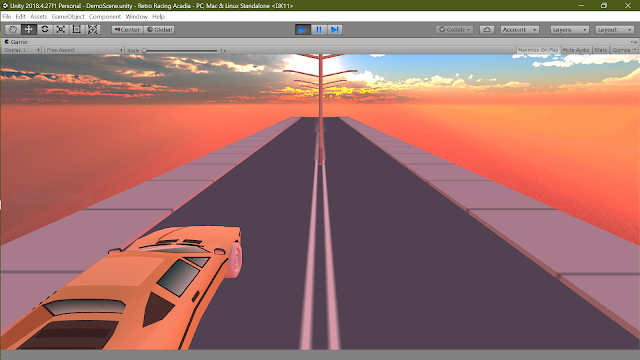
 Looking Back This week we were tasked to look back and reflect reading on previous reading and writing about the impact it has had, in general, I believe the reading tasks have greatly improved the knowledge of games and allowed me to gain a better understanding the fundamental of what makes a game and the processes involved making a game. All the blog so far greatly helped me greatly in terms of helping me understand the mechanics and systems that are needed in a game and the different types of methods the can be implemented to make the game. I have definitely have learnt a lot from engaging each week, learning about different strategies that I found myself utilising in future projects. I am extremely happy with my game project, i think I've made good progress overall and the i found my concept is strong and i have a good direction in mind. The image i decided to choose was i sceenshot i took from the start of my game, the reason i gravitated towards this particular image was the...

Game Fun

Image
  An image with the text "Game Fun" ( Source ) Games can be described by the 3 components Mechanics, Dynamics, and Aesthetics (MDA) or otherwise stated as rules – system – “fun”. The three reading selections this week and the synopsis below all address the term “fun” in relation to game design. There are eight types of Fun outlined by the MDA. These eight are both a source of reference and player experience that blend together in many ways, and essentially what makes a game engaging and enjoyable. This deconstructed concept is illustrated in figure 1 below. Figure 1: Eight kinds of Fun Both Oxford and Merrian dictionaries define Fun as an enjoyment, delight but within the context of a game, it refers to a form of pleasurable entertainment. MDA papers define the '8 kinds of fun' sensation, fantasy, narrative, challenge, fellowship, discovery, expression, and submission, remain a source of reference and possibly the most popular list of player interactions combining in ...

Games Decisions

Image
  An image of a retro Game ( Source ) Video “In order for the player to be optimally engaged, challenges should be presented at a level equivalent or slightly higher than their current skill. Not too easy, not too hard”( Gigity McD ) The word 'flow state' was coined by Csikszentmihalyi (1975) also known as being “in the zone” This is when the player is fully engaged in the game experience. Csikszentmihalyi put a lot of work into observing and analyzing various groups of people. This theory is focused on the idea of how people should balance their skills and the demands of particular tasks. An example of Flow would be a challenge in a game that interests the player such as a puzzle or a boss battle meant to keep the player interested and not get bored. Csikszentmihalyi also states that flow is related to an ideal psychological condition when a person engages in a challenge-skill activity, often resulting in concentration and a focused emphasis on a task. A practical technique f...

Games GDD

Image
  An image of a yellow book on a red background ( source ) For what function is GDD?  A Game Design Document (GDD) is a blueprint for a game's design and development.  The GDD is a way to be imaginative and record the approach to the game's development. Gonzale (1999 ) notes that before jumping into production, the important thing is to have something that explains your game project (or any other project for that matter) before jumping into production. (Gamasutra) The game should be prepared. While it is recommended that the GDD should be brief, it needs to be sufficiently comprehensive to allow game developers and artists to independently manage the production of the game while also retaining the design.  The GDD is a blueprint similar to a mind map for how the game is going to be planned and developed. In conclusion, in order to explain your game project, the game design document is essential for creating a game and it is necessary to have it. How do we produce one...

Games MDA

Image
  A picture of an old retro game ( source ) I found the MDA: A Formal Approach to Game Design and Game Research paper by Hunicke, R. LeBlanc, M. & Zubek, R. (2004) very insightful on the different aspects of the gaming methodology. in the paper, they discussed the diverse components of the MDA framework. The MDA framework or Mechanics, Dynamics, Aesthetics is the fundamentals of games and refers elements of a game structure. An example, the dynamics represents the data or algorithms in a game. the mechanics describe the behaviour of the mechanics based on the player's inputs and the aesthetics apples to the emotional response that the player undergoes during the interaction of the game. The paper also included ways to accurately describe game aesthetics such as "1. Sensation Game as sense-pleasure 2. Fantasy Game as make-believe 3. Narrative Game as drama 4. Challenge Game as obstacle course 5. Fellowship Game as social framework 6. Discovery Game as uncharted territ...

Game Elements

Image
  A picture of a retro game ( source ) What is a game? this is the question that seems to be impossible to answer and even harder to explain if it comes up in conversation. in the german language, It states a game is any activity that is executed for only pleasure and without any conscious purpose as stated in the " what is a game " article. knowing the fundamentals or "atoms" of game design is something that ultimately allows for a better understanding of games. there are a couple general criteria that games follow, these gaming elements are as follows  Players  This refers to players that will be present in a game a determines the interactivity the game offers.   Objectives This is the hypothetical lungs of the game and is very important, this is what is going to make the game playable in terms of giving the play something to aim for. Rules  the rules are important in games, they provide guidelines and keep everything balanced a prevent chaos that would o...

Game Design

Image
What is a game? Google defines a game as "an activity that one engages in for amusement or fun", in many terms a game cand be classified as an act or a physical activity in which there is a set of rules and a set outcome or end goal to achieve. although these definitions are right in many ways they don't fundamentally state how to make or design a game.  There are may characteristic that needs to be taking into account when discussing games and their development, in terms of making a game, it has to produce a certain set of elements such as (1) having set rules in place, (2) producing a conflict of some sort (3) employ decision-making (4) have a defined outcome. theses elements are vital in making any game successful and are the key fundamentals in the design process, ultimately there isn't any set in sone definition and they all have the flaws. the main goal is to take into consideration all aspects and understand that games are a form of art that can make their own ...